Buying a home along the Front Range asks more from a roof than most markets. The same skyline that sells the neighborhood also punishes your shingles with alpine sun, freeze-thaw cycles, and hail that can jump from pea-size to golf-ball in one violent afternoon. A roof that looks photogenic at a showing may already be compromised under the surface. The stakes are not simply cosmetic or even structural. Roof health touches insurability, resale leverage, and how quickly you settle into the house without construction crews showing up after your first spring storm.
I have walked more Colorado roofs than I can count, from Broadmoor estates to 1950s ranches in Stratton Meadows. I have seen brand-new roofs installed after a hailstorm fail in their second year because of cut corners, and I have seen 18-year-old shingles weather gracefully thanks to proper ventilation and fastidious installation. What follows is a home buyer’s guide built on that lived experience, not a boilerplate checklist. It is shaped by our particular climate, the habits of local trades, and the way insurers treat claims in El Paso County.
What the Colorado Springs climate does to a roof
At 6,000 feet, ultraviolet exposure is harsher than on the coasts. I have measured attic temperatures that swing from the low 30s in the morning to 140 degrees by late afternoon in July. Asphalt shingles, even the good ones, grow brittle faster under UV and heat cycling. Winters rarely deliver endless snowpack, but they construction company colorado springs bring sharp temperature dips and chinook swings that drive expansion and contraction in nails, flashings, and sealants. Late spring and mid-summer are hail seasons, and while not every storm triggers a claim, the cumulative effect of two or three years of pellet strikes can loosen aggregate and expose asphalt. Wind rides the Palmer Divide and funnels down Monument and Cheyenne canyons. Gusts find the weak points where installers skimped on nails or skipped starter strips.
A roof that thrives here earns it. That is why roofing contractors in Colorado Springs CO talk so much about nailing patterns, ridge vent balance, and shingle class ratings. When you are evaluating a property, you are not just buying a look, you are buying performance under stress.
The first pass from the curb and the driveway
You do not need a ladder to catch the biggest tells. Approach the home the way an insurer’s inspector would: slowly, from a distance, letting your eyes trace lines and edges.
Look at plane uniformity. A roof should sit smooth and flat across each face. Ripples can signal multiple overlays or poor sheathing. Up-close, rippling sometimes traces back to thin OSB, often 3/8 inch in older homes, that flexes between rafters. That matters because asphalt shingles need a stable substrate to keep their seal and resist wind lift.
Scan for patchwork coloration. Shingles fade with UV, but mended sections often read as darker or cleaner rectangles. Patches are not inherently bad if the repair was timely and flashed correctly, but patchwork on multiple facets can indicate chronic issues, and insurers may treat that history warily.
Study the edges. Drip edge should run clean under the starter course. If you can see raw sheathing or the starter misaligned, installation was casual. At gable ends, look for straight rake lines rather than wave. Lazy lines suggest either warped decking or an installer racing a thunderhead.
Check the valleys and penetrations. Even from the ground, you can usually spot metal flashing in valleys. It should present a consistent width, a clean bend, and no tar troweled over the top. Heavy tar is a red flag, a field fix where precision should have done the job. Around chimneys and skylights, counterflashing should tuck into mortar or sit under siding, never stuck on the surface like a bandaid.
While you are still at ground level, listen. On a breezy day, a loose shingle makes a telltale clap. I once heard that sound on a showing near Stetson Hills, and the seller’s agent insisted the roof was “only five years old.” It was. The installer, however, ran a four-nail pattern on a ridge that sees 60-mile-per-hour gusts several times a year. Age is not everything.
When to walk the roof, and when to let a pro do it
If the pitch is mild and the roof is dry, I sometimes climb to do a tactile check. Most buyers should not. The cost of a licensed inspection from roofing contractors Colorado Springs CO is modest compared to a fall or a broken shingle that voids a warranty. That said, if you do step onto a low-slope roof, feel for give underfoot. Spongy sections point to delamination or moisture in the deck. Look at nail heads along ridge caps. If you see silver glints, fasteners are backing out or were shot high. On composition shingles, run your fingers across the granules. Heavy granule loss exposes asphalt. If you come away with a palm full of crumbs and the shingles still claim to be under ten years old, something is wrong.
Pros bring more than safe ladders. A good inspector carries a probe for soft decking at eaves, a moisture meter for suspicious valleys, and a practiced eye for hail signatures that differ from blistering or footfall. Hail leaves a bruise in the mat, not just a scuff. It often displaces granules in a halo and can crack the fiberglass layer beneath the asphalt. Blistering pops granules from heat and poor ventilation and tends to be smaller, more uniform, and concentrated on sun-baked slopes.
What hail really does, and how to read it
Because hail is our constant companion, buyers tend to treat any mark as a claim waiting to happen, or the reverse, dismiss everything as “cosmetic.” The truth lives between.
On thicker architectural shingles rated Class 3 or 4, hail up to an inch may leave cosmetic scuffing but no mat break. Those shingles can age normally and retain their water shed, though resale optics may suffer if an appraiser or insurer is trigger-happy. On thinner three-tabs, the same storm often damages enough squares to justify replacement. The catch: insurers look for random distribution, not concentrated marks from a ladder, rake, or old satellite dish. They also care about the number of “hits” per square, typically eight to twelve, depending on the carrier, and the type of collateral damage visible on downspouts and soft metals.
When I inspect, I start with gutters and fascia. Dings on the top lip of an aluminum gutter or creases in window beading corroborate hail size. Then I move to slopes. A 10-by-10 area, properly chalked, tells the story. If you are a buyer, you do not need to chalk the roof, but you do need to ask the right questions. When was the last major hail event in this ZIP code? Was a claim filed? If the roof was replaced after a claim, who did the work and what shingle was installed? This is where you want names, not just “a local company.” Reputable roofing contractors in Colorado Springs CO stand behind their work and register warranties. If the seller cannot produce an invoice or permit, budget for a more cautious inspection.
Ventilation, ice dams, and the quiet killers
Roofs fail early here not simply because of hail but because of the attic environment. The best shingles lose the long game if the attic cooks.
Balanced intake and exhaust keeps temperatures moderated and moisture moving. Soffit vents should be open, not stuffed with insulation, and matched to ridge or box vents. I have seen luxury homes with immaculate tile and copper details, and yet their attic baffles were suffocated by overzealous insulation crews. The result was condensation, moldy sheathing, and a roof that looked healthy from the driveway but showed blackened plywood at the eaves.
Ice dams are less notorious here than in Minnesota, but they happen on north-facing eaves after a snow followed by sun. Warm attic air melts the under-snow layer, water flows to the eaves, then refreezes on the cold overhang. Over weeks, that freeze-thaw wedges water under shingles. The cure is ventilation and proper underlayment. Colorado code requires ice and water shield along eaves and valleys. On homes above 7,000 feet or in shaded settings, I prefer to run it three courses up. When you inspect, lift the edge of a shingle at the eave gently to see if a membrane sits beneath. Do not pry, and do not do this in cold weather, when seals are brittle. A professional can verify coverage without risking damage.
Flashing and penetrations: the details that make or break a warranty
Most leaks begin where planes meet or where something sticks through the roof. Chimneys need both step flashing along the sides and counterflashing embedded in mortar joints or sleeves tucked under siding. Skylights need a full kit, not a bead of caulk. Plumbing vents typically wear rubber boots that degrade under UV. I plan to replace them proactively every 7 to 10 years unless we use lead or metal solutions with neoprene caps.
Look at satellite mounts, solar stanchions, and holiday light anchors. Roofs accumulate the scars of household life. I once found a perfect square of 16 screw holes where a previous owner had mounted a pergola on a garage roof. The patch was tar and wishful thinking. A competent repair would have replaced the affected shingles and sealed from beneath with membrane.
If the home has stucco abutting a roof line, pay attention to kickout flashing. Missing kickouts send water behind stucco, and that invisible drama turns into swollen OSB, efflorescence, and expensive remediation. A good general contractor in Colorado Springs CO will spot this even during a broader home inspection, but it pays to learn the shape. A small diverter at the bottom of the step flashing moves water into the gutter rather than down the wall.
Reading the paperwork: permits, invoices, and warranties
Colorado Springs tracks re-roof permits, and reputable firms pull them. Ask the seller for the permit number and the final inspection report. Most insurers now require a permit and proof of completion before binding a new policy on a hail claim roof. The invoice should list the shingle brand, model, and color, underlayment types, and any decking replaced. Architectural shingles that claim impact resistance should specify Class 4 if that was the product. Beware vague entries like “30-year shingle” without a brand. That phrase has lost meaning over decades of marketing creep.
Warranties come in layers. The manufacturer offers material coverage. The contractor offers workmanship coverage. In this market, a strong contractor workmanship warranty runs five to ten years, sometimes more, and it is only as good as the company’s stability. This is where names matter. Ask whether the installer is a certified partner for the manufacturer, which can extend the material warranty and even backstop workmanship to a degree. Some policies reduce insurance premiums for Class 4 shingles, but that discount sometimes comes with cosmetic damage exclusions. Read that clause closely. You may save $200 a year but forfeit coverage for a hail event that leaves the roof functional but unsightly, which can matter on resale.
How roof condition affects insurance and the deal
Underwriters in El Paso County are cautious. Some carriers decline to write new policies on roofs older than 15 years, regardless of condition, unless inspected and approved. The difference between a roof at 12 years that has been ventilated and maintained, and one at 12 years that has suffered heat, hail, and poor installation is stark. Plan for this before you craft your offer. I have negotiated credits that reflect not just current condition but the likely insurability over the next three to five years. If the roof is younger than five years, a clean invoice and a transferable warranty add weight to your offer. If older than ten, a professional inspection report from established roofing contractors in Colorado Springs CO helps your underwriter say yes, and it keeps everyone aligned on risk and repairs.
In multiple-offer situations, buyers sometimes waive inspection objections. Do not do this on a roof unless you have recent documentation and a third-party assessment. You can streamline the process with a rapid roof-only inspection during your showing window. Most quality firms will accommodate a quick look within 24 to 48 hours, especially if you signal that a replacement may come their way if you close.
Materials that earn their keep here
Architectural asphalt remains the most common choice. It balances cost and performance, and modern Class 3 or 4 products hold up well when installed with correct nails and underlayment. Pay attention to the specific model. Some “impact-resistant” shingles use a reinforced mat, others a rubberized asphalt, and they age differently. I have watched certain reinforced mats survive one inch hail with grace, then turn brittle in year twelve under UV. The rubberized mixes can stay pliable longer but may scuff more easily when hot.
Metal is rising in popularity. Standing seam with concealed fasteners performs beautifully in wind and sheds snow. It can ring under hail and show cosmetic dimples, which some owners accept as a patina of living in the Rockies. Exposed fastener systems cost less but require maintenance as gaskets age and screws back out. If you are buying a house with metal, ask when the fasteners were last checked and whether the installer used a butyl tape and compatible underlayment to avoid condensation issues.
Tile and stone-coated steel appear in higher-end neighborhoods. True concrete or clay tile can last for decades, but the underlayment is the clock you watch. I often find 20-year underlayment dying under tiles that look flawless from the street. A replacement means removing and stacking tiles, replacing the membrane, and re-laying, which is not trivial. Stone-coated steel blends the tile look with lighter weight and strong impact performance. Inspect the panels’ interlocks at hips and valleys for tight, clean seams.
The rest of the exterior plays a role
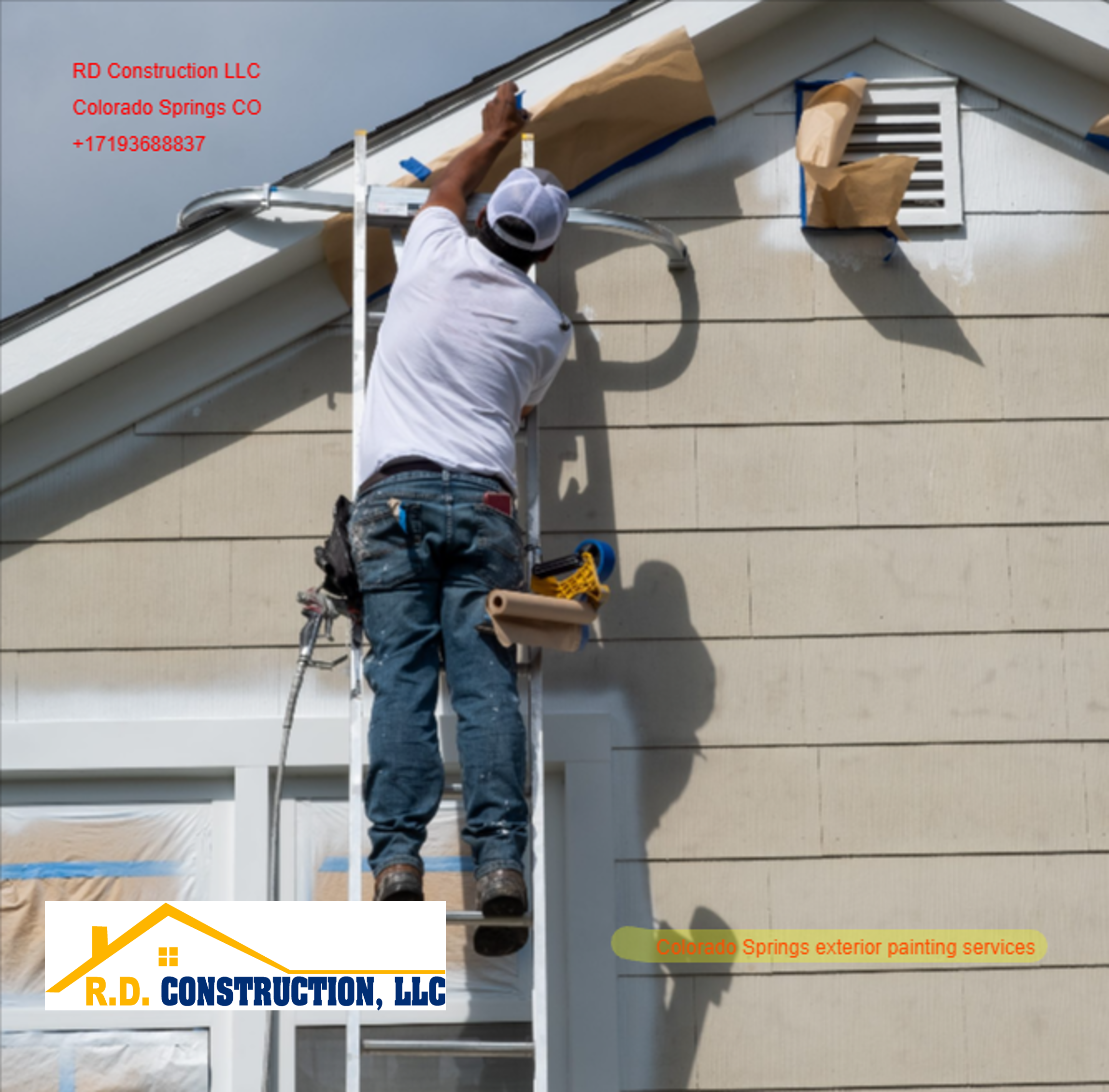
While this guide centers on the roof, the envelope below affects its lifespan. Paint protects fascia and soffits, which anchor drip edge and gutters. A Colorado Springs painting contractor who understands local UV and temperature swings will spec coatings that defend the trim and fascia against the same sun that beats on shingles. Rot at the eaves often begins where paint failed and water wicked into end grain.
Gutters and drainage matter. I favor oversized downspouts on homes with complex rooflines. During cloudbursts, water that stays on the roof too long creeps sideways. Properly pitched gutters with clean outlets keep valleys from backing up. If the house includes new concrete flatwork or you plan to add it after closing, coordinate with a concrete contractor Colorado Springs CO to ensure downspout terminations and slope keep water away from foundations. Good roof design without smart drainage is half a solution.
On larger renovations, you may involve a general contractor in Colorado Springs CO to coordinate roof replacement with exterior paint, window updates, or solar. Sequencing matters. Install roof and penetrations before painting or new stucco. Plan solar after the new roof, not before, to avoid double labor on stanchions and wiring. A contractor who manages these moves can save weeks and avoid trades working at cross-purposes.
How to talk to a roofer like a pro
When you meet an inspector, ask pointed, practical questions. You are not trying to corner anyone, you are building clarity.
- Which slopes show the most wear, and why? I want cause, not just symptom. What is the nailing pattern you see, and how consistent is it? How is the attic ventilated, and does intake roughly match exhaust? Do you see hail impacts that broke the mat or just scuffing? What collateral damage supports your read? If we replaced, what shingle or system would you recommend for this exposure, and what would you change from the existing assembly?
A good roofer answers without hedging and uses plain language. They point with a camera, share photos, and talk about solutions in terms of systems, not just shingles.
Pricing realities and where the money goes
For a typical 2,000 to 2,500 square foot home in the Springs, a full asphalt replacement often falls in the mid to high five figures, depending on steepness, story count, access, and materials. Complex roofs with multiple valleys, dormers, and features cost more because labor climbs. Metal and tile step into six figures for larger or high-end homes. When you see a bid, look for line items that show underlayment type, flashing replacement, ventilation upgrades, and decking sheets if needed. A bargain price that skimps on ice and water shield, leaves old flashings in place, or ignores ventilation is not a bargain here. The winds will tell you so.
If an insurance claim covers the work, the numbers flow differently. Most policies pay actual cash value upfront, with depreciation released after completion. Watch for supplement items like decking or code-required ventilation that were not captured in the initial adjuster scope. A seasoned contractor in this market knows how to document these legitimately without games. You, as a buyer, want that professionalism. Sloppy supplementing makes closing messy when mortgage companies hold funds.
Timing your inspection and replacement
Roofers book quickly after hailstorms. If you are under contract in May or June, plan for longer lead times. Still, a roof-only inspection rarely takes more than an hour and can be scheduled quickly if you are flexible. If the roof needs replacement after you close, late summer into fall is prime. Temperatures stay ideal for shingle adhesion and seal strip activation. Winter installs happen, but seal strips may not bond until spring warmth returns. In that scenario, a conscientious crew will hand-seal critical areas and ridge caps. Make sure the contractor promises a spring check for seal set if winter work is unavoidable.
Edge cases worth your attention
Not every roof reading fits the template. Here are a few situations I see often enough to merit calling out.
Heavily treed lots in the Old North End shelter roofs from UV but feed them needles and sap. Organic debris traps moisture and feeds lichen, which lifts granules. If buying under canopy, budget for regular cleaning and zinc or copper strips to suppress growth.
Homes near the Air Force Academy or open spaces see more unbroken wind fetch. Even good shingles can lift if ridge caps are thin or if installers under-nailed starter courses. If I am replacing in these zones, I upgrade ridge caps and confirm six nails per shingle as a standard, not an upcharge.
Flat or low-slope sections over porches and additions need membranes, not shingles. Modified bitumen or TPO must be flashed into walls and transitions with discipline. I often see shingles run down to a flat and smeared with mastic where a proper cricket and membrane would keep water moving. If a listing boasts a “new roof” but the flat is original, assume leaks will introduce themselves in the first hard rain.
Bringing it all together at the offer table
A roof in Colorado Springs is either a confident asset or a future project. Your job is to know which one you are buying. Use the curb read to spot obvious issues, then bring in a pro early. Gather the paperwork, verify permits, and ask smart questions. Think in systems: shingles, underlayment, flashing, ventilation, drainage. Tie the roof’s condition to insurance reality and the likely arc over the next five to ten years. If work is needed, leverage bids from roofing contractors in Colorado Springs CO who will still be in business to honor their warranty. Coordinate with a Colorado Springs painting contractor for trim and fascia protection after any roof work, and with a concrete contractor Colorado Springs CO if drainage adjustments require new flatwork. If the project is part of a broader refresh, lean on a general contractor in Colorado Springs CO to sequence trades and protect your investment.
I have watched buyers win by treating the roof as a priority rather than a line item. They close with confidence, insure without drama, and enjoy the first summer storm from a dry sofa. That is the point, after all. A roof is a promise. In this town, keepers of that promise are the inspectors and installers who respect our weather and sweat the details. As a buyer, pick your partners and ask the questions that lead to a home that shelters you with quiet, durable grace.
RD Construction LLC
Colorado Springs, COPhone: +1 719-368-8837
Category: Construction Company, roofing, painting, concrete
Hours:
Monday – Friday: 8 AM – 5 PM
Saturday: Closed
Sunday: Closed
RD Construction LLC
RD Construction LLC is a trusted construction company based in Colorado Springs, CO, providing high-quality roofing, painting, and concrete services. The team at RD Construction LLC focuses on delivering reliable, professional, and safe solutions for residential and commercial clients throughout the region, including service areas in Aurora, Denver, Golden, Fountain, Monument, and Colorado Springs, CO.
The company specializes in a variety of construction services including roofing installations and repairs, exterior and interior painting, and concrete work for driveways, patios, and walkways. Their approach combines modern techniques with durable materials, ensuring long-lasting results that meet client expectations.
Operating in the vibrant Colorado Springs community, RD Construction LLC has established itself as a dependable local business. They work closely with homeowners, property managers, and businesses to provide tailored construction solutions, adapting each project to the unique needs of the location and client requirements.
Landmarks
Located near the iconic Garden of the Gods, RD Construction LLC benefits from a central Colorado Springs location that is easily accessible. The area is also close to Pikes Peak, providing stunning mountain views and convenient proximity for clients traveling from nearby neighborhoods.
Other nearby landmarks include the Colorado Springs Fine Arts Center and the historic Old Colorado City district, both of which showcase the cultural and artistic vibrancy of the area while serving as reference points for visitors and clients alike.
For services or inquiries, clients can visit RD Construction LLC at Colorado Springs, CO, or contact them by phone at +1 719-368-8837. A clickable Google Maps link provides easy directions to the location.
The company is led by experienced professionals with extensive backgrounds in construction management and hands-on fieldwork. RD Construction LLC’s team has received training in modern construction techniques and safety standards, ensuring each project is executed efficiently and to the highest quality standards.
Popular Questions
Q: What services does RD Construction LLC offer?
A: They offer roofing, painting, and concrete services for both residential and commercial properties.
Q: How can I get a quote for my project?
A: Clients can call +1 719-368-8837 or visit their Colorado Springs location to request a consultation and estimate.
Q: Where is RD Construction LLC located?
A: The company is based in Colorado Springs, CO. Directions can be found using their Google Maps link.
Q: Are RD Construction LLC’s services available for commercial projects?
A: Yes, they provide construction services for both residential and commercial clients, customizing solutions to meet specific needs.
Q: What makes RD Construction LLC a reliable choice?
A: Their experienced team, focus on quality, and commitment to safety and client satisfaction make them a dependable local construction partner.